Great Yews near Salisbury
Limited Edition Ancient Yew Tree Print by Charles Sainsbury-Plaice
Yew trees have occupied a unique place in the British landscape for thousands of years. Their longevity, evergreen foliage and extraordinary ability to regenerate have made them symbols of continuity, remembrance and renewal. Some ancient yews have survived through many centuries of changing weather, land ownership and human history.
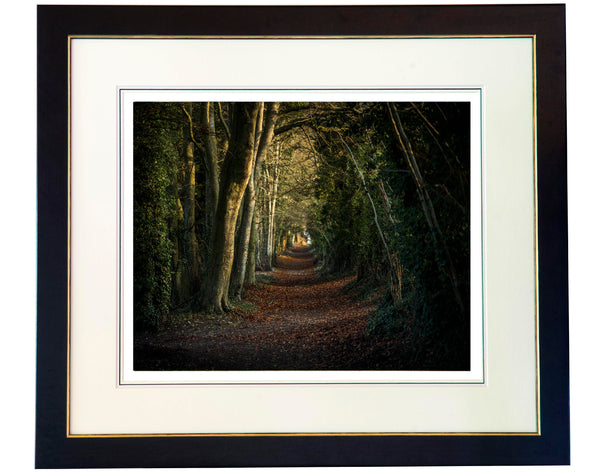
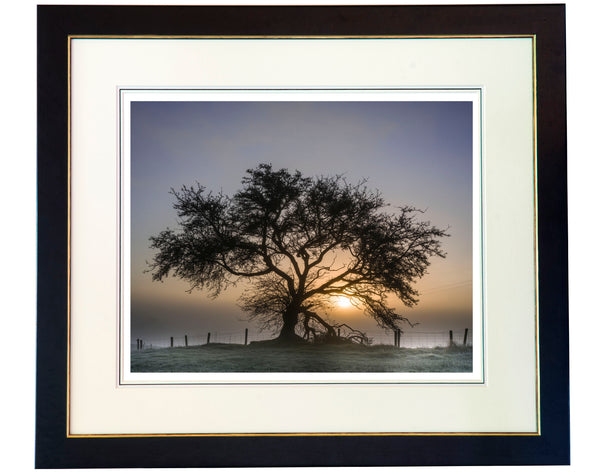
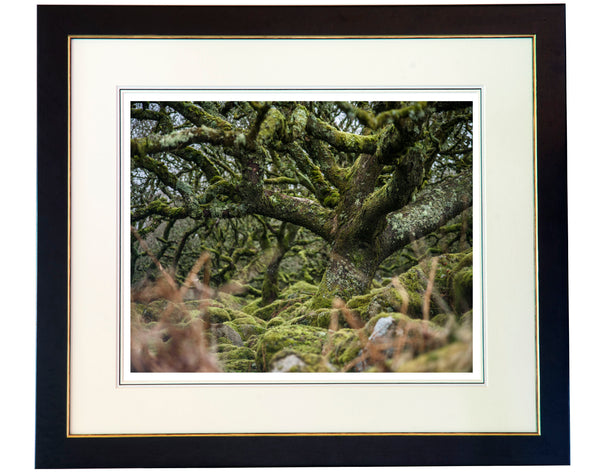
This limited edition print by Charles Sainsbury-Plaice portrays the Great Yews near Salisbury, a remarkable group of mature trees within the chalk landscape of southern England. Their broad trunks, twisting limbs and deeply textured bark create an image filled with character and quiet strength.
Yews grow slowly, often developing hollow trunks and complex internal structures as they age. A hollow tree may continue to live for centuries because new growth forms around the surviving outer wood. This unusual growth habit makes the true age of an ancient yew extremely difficult to calculate.
History, Tradition and the Longbow
Yew wood has long been associated with the English longbow because its combination of heartwood and sapwood provides both strength and flexibility. Local tradition associates the Great Yews near Salisbury with the supply of yew for longbows used during the medieval period, including those connected with the Battle of Agincourt.
This tradition should be understood as part of the folklore surrounding the trees rather than as a fully documented historical record. Nevertheless, it reflects the importance of yew wood within medieval society and the powerful place these trees continue to hold in the cultural imagination.
Ancient yews are also closely associated with churchyards and sacred places. In some cases, the trees may predate the churches beside them, suggesting that early religious buildings were established at locations that already held spiritual importance.
A Living Habitat
An old yew is far more than a single tree. Hollows, fissures, deadwood and dense evergreen foliage provide habitats for birds, bats, insects, fungi, mosses and lichens. The sheltered conditions beneath the canopy can create a distinctive microclimate, while fallen needles gradually influence the soil below.
Ancient trees are especially important because their ecological value increases with age. Features such as cavities and decaying wood take many decades to develop and cannot simply be replaced by planting young trees elsewhere.
Charles Sainsbury-Plaice has spent much of his career photographing Britain's countryside, historic landscapes and remarkable trees. His work for The Queen's Green Canopy helped document ancient trees and woodlands across the country, highlighting their cultural, ecological and historical importance.
In this photograph, the yews are presented not simply as landscape features, but as living witnesses. Their forms reveal the effects of weather, age and survival, while their evergreen foliage gives the image a sense of endurance.
This limited edition print is suited to collectors of British landscape photography, tree enthusiasts, historians and anyone drawn to the mythology and natural history of ancient yews.
View more tree prints and woodland photography, explore the full collection of Charles Sainsbury-Plaice artworks, or browse our range of tree and woodland greeting cards.